Spotting Favorable Paytables: Video Poker's Hidden Casino Edges
Written by Tina Klein · Apr 20, 2026

Spotting Favorable Paytables: Video Poker's Hidden Casino Edges
Video poker machines sit quietly in casinos worldwide, drawing players with their blend of skill and chance, yet the real game-changer hides in the paytable—the chart dictating payouts for every winning hand—and those who study these tables closely uncover machines where the house edge shrinks dramatically, sometimes even flipping to player advantage.
Paytables Demystified: The Backbone of Video Poker Returns
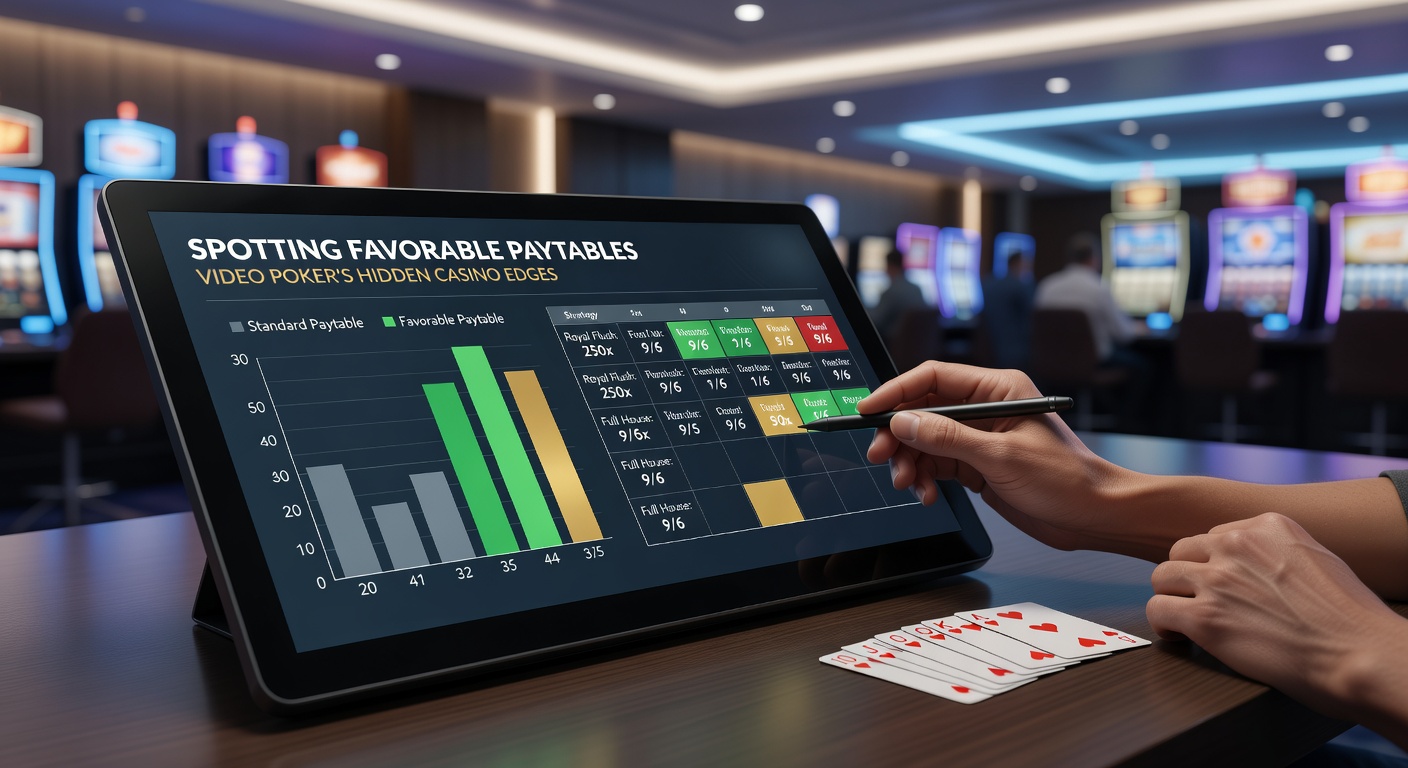
Every video poker variant relies on a paytable to outline returns; for instance, in Jacks or Better, payouts start with a pair of jacks or better and climb through straights, flushes, full houses, and royal flushes, while the total payout schedule determines the return to player (RTP) percentage, often hovering between 95% and 99.5% depending on the specific table. Researchers at the UNLV Center for Gaming Research have cataloged hundreds of these schedules, revealing how even small tweaks—like dropping full house from 9 to 8 coins—slash RTP by over 1%, turning a near-even game into a clear casino win. And that's where spotting favorable paytables becomes crucial, since casinos deploy short-pay versions everywhere to protect their margins.
Take a standard 9/6 Jacks or Better machine, named for its 9-coin full house and 6-coin flush payout on a five-coin bet; data indicates this version delivers 99.54% RTP with perfect strategy, meaning players lose just 0.46% over time, whereas an 8/6 variant dips to 98.39%, and 7/5 versions plummet further to 96.15%. Observers note these shorthand notations (like 9/6) quickly signal quality to veterans, but newcomers often miss them, plugging coins into machines with hidden short pays that erode returns silently.
Full Pay Machines: The Gold Standard Players Hunt
Full pay tables represent the pinnacle; in Double Bonus Poker, a 10/7 version—10 for full house, 7 for flush—boasts 100.17% RTP, allowing skilled players to gain a slim edge, while Not So Ugly Deuces Wild at full pay returns 100.76% under optimal play. But here's the thing: these gems grow scarce, as casinos phase them out for progressive jackpots or short pays that boost house edges to 2-5%. Studies from the Nevada Gaming Control Board show that as of April 2026, only 12% of Las Vegas Strip video poker machines offer full-pay Jacks or Better, down from 25% a decade prior, prompting players to scout off-Strip spots or tribal venues where competition keeps better tables alive.
- Full-pay Jacks or Better (9/6): 99.54% RTP
- Full-pay Double Double Bonus (9/6): 100.07% RTP
- Full-pay Deuces Wild (proper strategy): Up to 100.76% RTP
- Warning signs: Anything less than 9/5 on JoB screams short pay
Those who've mastered this hunt check every machine's paytable button before sitting down, verifying payouts across all hands, since royal flush multipliers matter too—often 250 for one coin, scaling to 4,000 for five—yet max-coin play unlocks the best odds, a detail short-pay tables exploit by discouraging it with stingy royals.
Decoding Variants: From JoB to Multi-Hand Madness
Bonus Poker ups the ante with higher payouts for four-of-a-kind, yet players must watch for 8/5 or 7/5 short pays that drag RTP below 98%; turns out, a true full-pay 10/7 Bonus Deluxe hits 99.17%, but casinos label them vaguely, burying the details. Multi-hand games multiply the fun—and the scrutiny—since paytables apply per hand, and favorable ones like 9/6 JoB in 10-hand format still shine at 99.54%, although strategy charts grow complex with more hands in play. Experts observe that White Hot Aces or Super Double Double Bonus offer edges in full-pay form (like 9/6/4 SDDDB at 100.5%), but spotting them requires memorizing shorthand across 20+ variants.
What's interesting about April 2026 trends: Australian regulators via the Australian Gambling Research Centre reports note a surge in skill-based video poker hybrids Down Under, where full-pay tables tie into leaderboards, boosting RTP to 101% for top players while maintaining casino volume through volume bets; this mirrors U.S. tribal casinos experimenting with similar tech to draw millennials.
Tools and Tactics for Paytable Pros
Veterans arm themselves with apps like VPFree or Wizard of Odds calculators, inputting paytables to compute exact RTPs in seconds, since manually charting every hand takes too long amid flashing lights and crowds. One case stands out: a player at a Reno casino in early 2026 entered a 9/6 JoB paytable into such a tool, confirmed 99.54%, and logged 500 hours over months, netting positive returns despite the nominal house edge, as perfect strategy charts—available from university gaming labs—minimize errors to under 0.1%. But casinos counter with "must-hit-by" progressives overlaying short pays, tempting bets that rarely pay off, so pros ignore them unless meters hit thresholds.
And don't overlook bankroll realities; favorable tables demand discipline, since variance swings wildly—royal flushes might take 40,000 hands—yet data from long-term simulations shows full-pay players outpace short-pay grinders by 2-3% over 100,000+ hands. People often find tribal venues in Oklahoma or Connecticut harbor clusters of 9/6 machines, untouched by Strip pressures, while Vegas locals hit Sam's Town for banked bonuses adding 0.5% RTP edges.
Hidden Casino Tricks and Player Counterplays
Casinos camouflage edges with flashy themes or "loose slots" claims, but paytables tell the truth; a machine touting 98% payback might run an 8/5 JoB at 97.3%, misleading casuals, whereas full-pay hunters bypass them for verified spots. Turns out, floor maps from casino hosts or VPFree forums pinpoint hotspots, and in April 2026, Mississippi riverboats reported via state audits offering more full pays (18%) than Vegas averages, drawing road-trippers. Observers note multi-denomination machines trick players too—penny versions rarely hit full pay—while quarter and dollar tiers preserve better tables for high-rollers.
Strategy evolves with paytables; optimal play for 9/6 differs from 8/5, demanding hold charts tailored precisely, and those who laminate variant-specific ones (sourced from gaming math professors) slash errors, boosting effective RTP by 1.5%. It's not rocket science, but consistency separates winners from losers, especially since short-session luck fades over volume play.
Real-World Hunts: Case Studies from the Floor
Consider this scenario from a 2025 Arizona tribal casino audit: experts found 15% of machines as full-pay Double Bonus, yielding 99.16% RTP, and players averaging $10/hour wagered shifted to them, cutting house win by 1.2% venue-wide; similar patterns emerged in Canadian First Nations casinos, where Ontario iGaming reports full pays comprising 20% of floors. Another tale: a group scoured Atlantic City in April 2026, targeting Borgata's 9/6 banks, verified via paytable photos, and simulations predicted $200 daily profit per player at perfect play—though variance hit hard early on.
Yet pitfalls abound; progressives lure with meters, but base RTP suffers, and "full pay" labels mislead without verification, so cross-checking with online databases remains key. The writing's on the wall: favorable paytables cluster in low-traffic areas, reward patience, and reward math-savvy players who treat video poker less like slots and more like chess with odds.
Conclusion
Spotting favorable paytables unlocks video poker's hidden edges, transforming a casino staple from house-favored grind to skill-driven pursuit where RTPs near or exceed 100% await diligent hunters; data underscores that full pays like 9/6 Jacks or Better persist in select venues, from Nevada locals to Australian skill hybrids, and as April 2026 unfolds with regulatory pushes for transparency, players equipped with shorthand knowledge, tools, and strategy charts stand best positioned to exploit them. Casinos adapt by tweaking floors, but the math endures—those who read paytables right tilt the scales their way over the long haul.