Charting Environmental Influences on Decision Accuracy Across Integrated Gaming Venues
Written by Sofia Schmid · Aug 5, 2026
Charting Environmental Influences on Decision Accuracy Across Integrated Gaming Venues
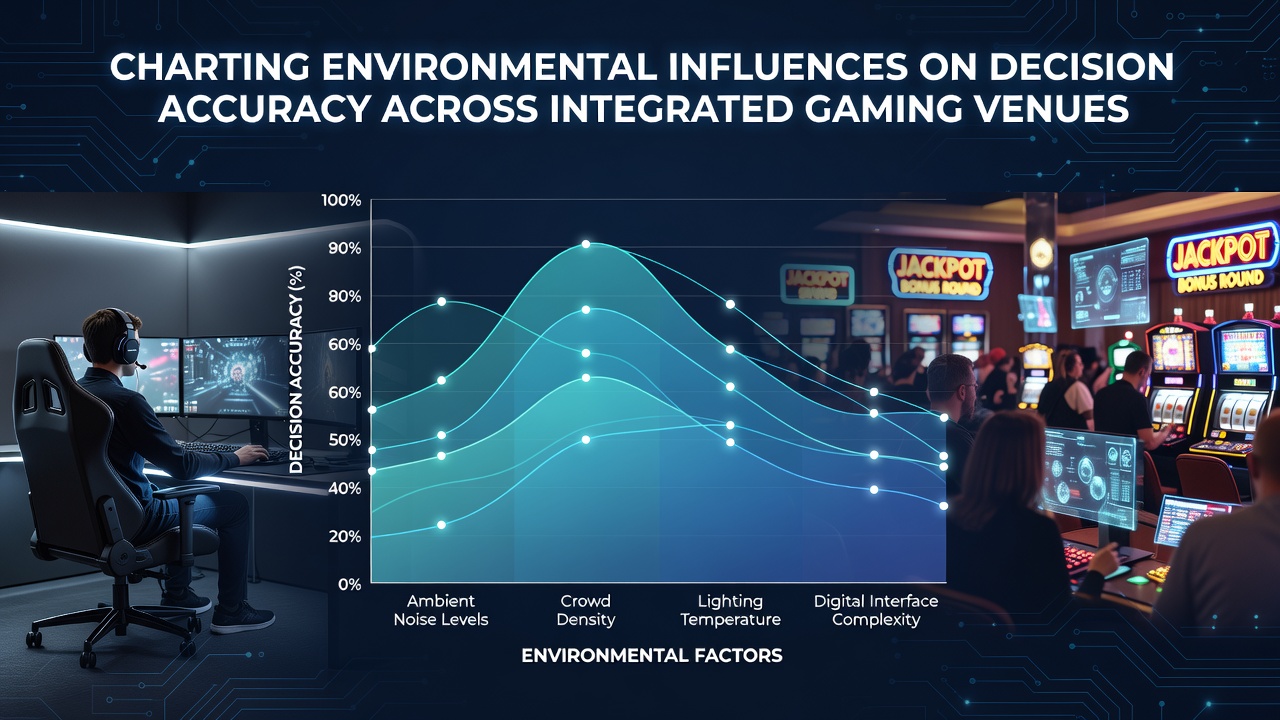
Integrated gaming venues combine multiple formats such as table games, electronic machines, and live events within single large spaces, and researchers have examined how physical surroundings shape player choices in these settings. Data from facility analyses indicate that lighting levels, ambient sound patterns, spatial layouts, and crowd densities interact with cognitive processes during betting sequences, while studies track measurable shifts in accuracy rates when participants evaluate odds or select actions under controlled variations.
Key Environmental Variables in Multi-Format Venues
Lighting systems in these venues range from high-intensity overhead arrays near electronic terminals to softer directional beams over table areas, and measurements collected across North American sites show that abrupt transitions between zones correlate with brief drops in sustained attention during rapid decision cycles. Soundscapes include layered audio from machine chimes, dealer announcements, and background music, whereas acoustic mapping projects reveal that sustained exposure above 75 decibels aligns with reduced precision in probability assessments according to controlled observation protocols.
Temperature controls and air circulation patterns further contribute, with sensor logs from large complexes demonstrating that deviations beyond 21 to 24 degrees Celsius associate with altered risk calibration among repeated trials. Layout configurations that cluster high-traffic corridors near payout stations create variable sightlines, and time-stamped tracking data indicate that participants navigating these paths exhibit longer evaluation times before final selections compared with those in more segmented zones.
Observed Effects on Decision Accuracy Metrics
Accuracy in this context refers to alignment between chosen actions and optimal expected-value calculations derived from game rules and payout structures. Field studies conducted at integrated sites in Nevada and parts of Canada record average accuracy reductions of 8 to 12 percent when ambient sound exceeds baseline thresholds for more than 45 minutes, while visual clutter from adjacent promotional displays produces similar decrements during peak evening hours. Researchers note that these patterns hold across demographic groups yet intensify among participants who maintain continuous engagement without breaks.
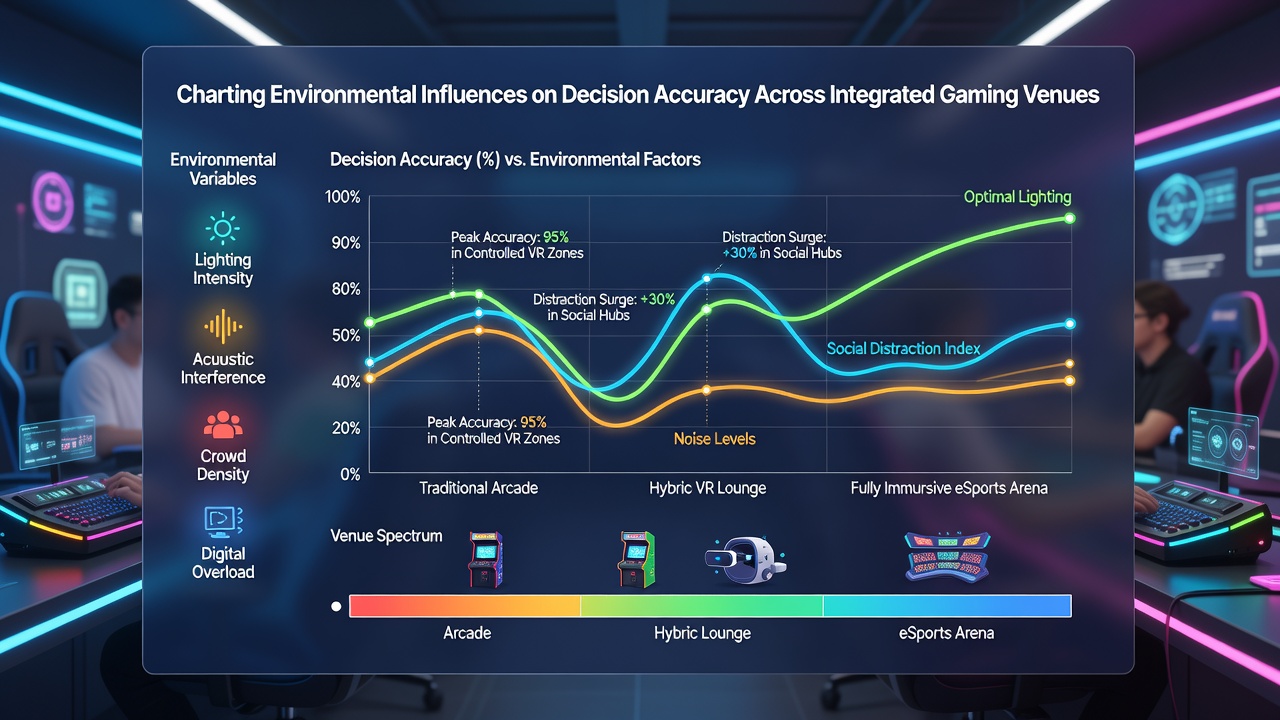
In August 2026, analysts affiliated with the University of Nevada released aggregated findings from sensor-equipped venues that documented a 10 percent recovery in accuracy scores after targeted adjustments to lighting uniformity and sound buffering in high-density sections. Cross-regional comparisons with facilities in Australian states show parallel trends, where modifications to pathway widths and seating density produced measurable stabilization in decision consistency over multi-hour sessions. These observations stem from repeated sampling rather than single-event snapshots, and they incorporate baseline controls for individual experience levels.
Measurement Approaches and Data Collection
Teams deploy wearable eye-tracking devices alongside venue-wide environmental monitors to capture simultaneous streams of gaze patterns, choice timestamps, and physical condition readings. Software platforms then align these inputs with game-state logs to compute deviation scores from mathematically optimal selections. Regulatory summaries issued by the Nevada Gaming Control Board reference such methodologies in periodic compliance reviews, and parallel frameworks appear in reports from the Australian Institute of Criminology that emphasize standardized protocols for multi-venue audits.
Statistical models applied to the resulting datasets isolate individual environmental contributors while accounting for interactions, such as the combined impact of elevated temperature and dense foot traffic. One analysis of 12 integrated properties identified crowd density as the strongest single predictor of accuracy variance during weekend peaks, whereas lighting uniformity showed stronger influence during daytime operations. These models rely on regression techniques applied to thousands of observed sequences rather than anecdotal reports.
Integration of Findings Across Regions
Comparative work between North American and European venues highlights consistent directional effects even when baseline architectural styles differ, and data compiled through academic partnerships indicate that incremental environmental tuning yields cumulative gains in decision alignment over successive visits. Venues that stagger machine volumes or introduce visual barriers between dissimilar game clusters record narrower spreads in accuracy distributions according to longitudinal tracking. Such adjustments remain compatible with operational requirements while addressing documented cognitive load factors.
Conclusion
Environmental charting efforts continue to refine understanding of how venue conditions intersect with decision processes in integrated settings. Aggregated evidence from sensor networks and observational protocols supplies operators and oversight bodies with quantifiable indicators for layout and ambiance planning. Ongoing data collection through 2026 and beyond supports iterative refinements that maintain functional accuracy across diverse gaming formats without altering core game mechanics.